
RetraxPRO MX vs RetraxPRO XR: Which Aluminum Cover Fits Your Truck Better?
Both the RetraxPRO MX and RetraxPRO XR deliver the same core aluminum-slat construction and sealed, low-profile canister that Retrax is known for. The difference comes down to how you want to operate the cover and what finish matches your truck’s look.
We built both models on the same platform, so durability and weather sealing are identical. What you’re really choosing between is manual operation with a matte finish (MX) versus electric operation with a polished aluminum finish (XR).

Manual vs Powered Operation: How Each System Works
The RetraxPRO MX uses a spring-loaded manual opening system — you pull the strap at the cab end, and the cover retracts smoothly into the canister without electricity or motors. It’s the same friction-free sliding mechanism we use across our manual lineup, and it works the same whether your truck is running or parked for weeks.
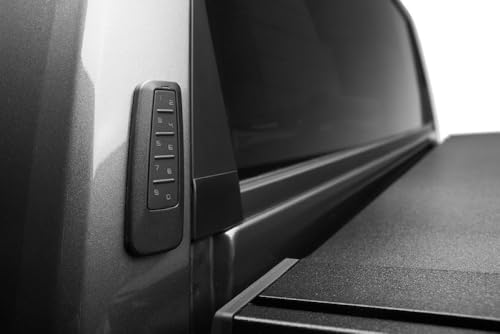
The XR adds a 12-volt motor that powers the cover open and closed with a key-fob remote or a dash-mounted switch. The motor draws minimal current, and the system includes a manual override crank in case of electrical failure. Electric operation means you can open or close the bed without leaving the cab, which matters if you’re loading in poor weather or need to secure the bed quickly at a stoplight.
Finish Differences: Matte Black vs Polished Aluminum
Surface Coating and Appearance
The MX features a matte black powder-coat finish over the aluminum slats. It hides minor scratches and dust better than a glossy surface, and the low-sheen look pairs well with bedliners and matte or dark-colored trucks.
The XR’s slats are polished bare aluminum with a clear anodized protective layer. The finish is brighter and more reflective, matching chrome bumpers or polished wheels. Both finishes resist UV fading and corrosion, but the polished aluminum shows water spots and fingerprints more readily than matte black.
Canister Size and Bed Space Impact
Both the MX and XR use the same low-profile canister design that sits flush with the bed rails when closed. The canister height is 11.5 inches, which leaves enough clearance under most fifth-wheel hitches and gooseneck mounts.
The XR’s canister is slightly wider (about 1.5 inches) to accommodate the motor and wiring harness. That difference doesn’t affect most cargo, but if you regularly load items that span the full width of the bed, measure your clearance before choosing the powered model. The 1MX shares the MX’s manual-canister dimensions if you’re comparing across our lineup.

Installation and Wiring Requirements
The MX installs with clamps that attach to the bed rails — no drilling required, and the entire process takes about 45 minutes with basic hand tools. There’s no electrical connection to make, so the cover works immediately once it’s clamped down.
The XR adds a wiring step: you route a harness from the canister to the cab, connect it to a switched 12-volt source (usually the truck’s fuse box), and mount the control switch on the dash or center console. The installation manual includes vehicle-specific wiring diagrams for most trucks. According to SAE International, proper grounding and fuse protection are essential for any aftermarket electrical accessory, and we include a 10-amp inline fuse with every XR kit. Total install time for the XR runs about 90 minutes if you’re comfortable with basic wiring.
Price and Long-Term Cost Considerations
The RetraxPRO MX vs XR decision often comes down to whether electric operation is worth the additional cost. The XR typically runs $400–$500 more than the MX, and that gap reflects the motor, wiring harness, remote transmitter, and control switch.
Long-term maintenance is minimal for both. The MX has no electrical components to fail, while the XR’s motor is sealed and rated for over 10,000 cycles. If the motor does fail outside of warranty, replacement motors are available, but you’ll also pay for installation unless you’re comfortable removing the canister yourself. BAKFlip offers a different approach with folding hard panels if you want to compare non-retractable options that avoid motors entirely.
Choosing Between Manual and Powered Retraction
The RetraxPRO MX vs XR comparison simplifies once you decide whether electric operation justifies the cost. If you value one-button convenience and don’t mind routing wiring during installation, the XR delivers that along with a polished look. If you prefer a simpler system with no electrical components and a lower price, the MX gives you the same aluminum protection and sealed canister design.
Both covers carry our limited lifetime warranty on the canister and slats, and both install without drilling into the bed. We see roughly equal sales between the two models, which tells us the choice is genuinely personal rather than one model being objectively better.
Common Questions About RetraxPRO MX and XR
No, the canister and rail system are different between the two models. The XR’s canister is designed from the start to house the motor and wiring, and retrofitting an MX would require replacing the entire canister assembly, which costs nearly as much as buying the XR outright.
Both models lock in the closed position using the same tailgate-integrated lock, and both retract fully into the canister to give you 100% bed access when open. Security and access are identical — the only difference is how you trigger the open and close action.
The motor is rated for operation down to -20°F, and it draws minimal standby current when parked. If your truck sits unused for extended periods, you can disconnect the battery or use the manual override crank to open the cover without power. We’ve tested the system through multiple freeze-thaw cycles without failure.
The MX produces a soft sliding sound as the slats retract — it’s quiet enough that you won’t wake neighbors in a residential driveway. The XR’s motor adds a low hum during operation, similar to a power window. Neither model is loud, but the MX is slightly quieter overall.
Yes, both the MX and XR clamp onto the bed rails above the liner, so spray-in or drop-in liners don’t interfere with installation. If you have a front-mount toolbox, measure the clearance — the canister needs about 12 inches of space at the cab end of the bed, and both models require the same footprint.
Both finishes are equally durable in terms of corrosion and UV resistance. The matte powder coat hides scratches and scuffs better visually, while the polished aluminum is easier to clean but shows marks more readily. Durability is the same — the difference is purely cosmetic maintenance.